Molecular Nanotechnology: Exploring Science at the Nanoscale
Understanding Molecular Structures and Nanoscale Phenomena
Molecular nanotechnology explores the properties, organization, and interactions of structures at the molecular and nanoscale levels. By investigating materials and biological components at these dimensions, researchers can better understand how molecular architecture influences physical properties, chemical behavior, and biological functions.
This interdisciplinary field brings together molecular biology, chemistry, materials science, physics, and biotechnology. It provides a scientific framework for examining the relationships between molecular composition, structural organization, surface characteristics, and interactions with surrounding environments.
Advances in analytical instrumentation, molecular modeling, and material engineering continue to expand the possibilities for investigating nanoscale systems. These approaches support research into biomolecular assemblies, functional nanomaterials, molecular recognition, and interfaces between engineered structures and biological environments.
Fundamental Principles of Molecular Nanotechnology
Molecular nanotechnology focuses on the behavior and organization of matter at extremely small scales. At these dimensions, the properties of a structure may depend strongly on its composition, geometry, surface chemistry, and interactions with neighboring molecules.
Molecular forces such as hydrogen bonding, electrostatic attraction, van der Waals interactions, and hydrophobic effects can influence the assembly and stability of nanoscale structures. Their relative importance depends on the molecular system and the conditions in which it operates.
Understanding these forces helps researchers investigate how molecules associate, reorganize, and interact with their surroundings. Such knowledge is relevant to the study of proteins, nucleic acids, lipid assemblies, polymeric materials, and engineered nanoscale platforms.
Molecular organization is therefore an important factor in determining the properties and behavior of complex systems.

Molecular Architecture and Structural Organization
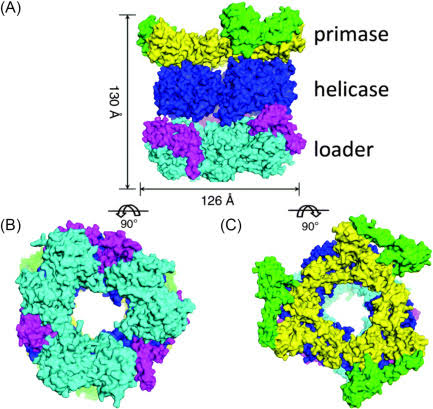
Molecular architecture describes the arrangement and organization of molecular components within a structure. This organization can influence stability, flexibility, binding interactions, and functional properties.
In biological systems, molecular architecture is evident in protein folding, nucleic acid structures, lipid membranes, and multiprotein complexes. The spatial arrangement of molecular components often determines how these systems interact with other molecules.
In engineered nanomaterials, researchers can modify composition, surface functionality, and structural arrangement to investigate specific properties. These modifications may affect solubility, aggregation, molecular recognition, and interactions with biological environments.
Characterizing molecular architecture requires complementary experimental and computational approaches. Structural imaging, spectroscopy, biochemical analysis, and molecular simulations can provide different types of information about the organization of nanoscale systems.
Combining these approaches enables a more comprehensive interpretation of structure–function relationships.
Nanomaterials and Functional Properties
Nanomaterials are investigated across many scientific disciplines because their properties can differ from those of corresponding bulk materials. Their small dimensions and high surface-area-to-volume ratios may influence chemical reactivity, optical behavior, electrical characteristics, and interactions with surrounding molecules.
Common categories include polymeric nanoparticles, lipid-based structures, inorganic nanomaterials, and hybrid systems combining different components.
The choice of material depends on the intended research objective. Some materials are investigated for their optical properties, others for their ability to interact with specific molecules, and others for their structural or mechanical characteristics.
Material evaluation typically considers particle size, morphology, composition, surface charge, chemical functionality, dispersion stability, and behavior under relevant environmental conditions.
These characteristics must be measured using appropriate analytical techniques because differences in composition or preparation can produce substantial variations in material performance.

Molecular Recognition and Intermolecular Interactions
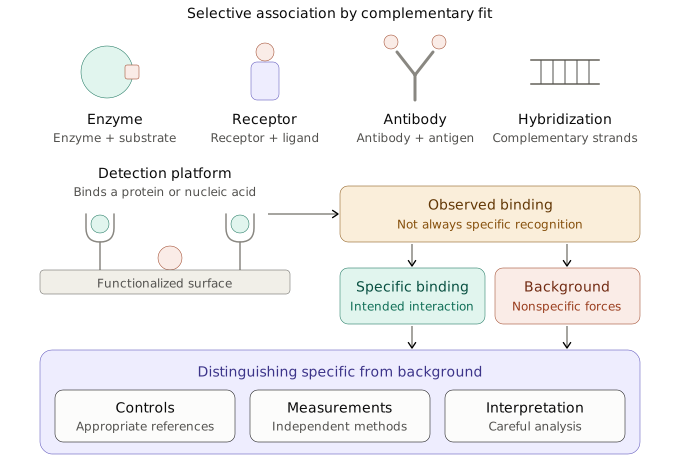
Molecular recognition describes the selective association of molecules through complementary structural and chemical properties. It plays essential roles in biological processes such as enzyme activity, receptor binding, antibody recognition, and nucleic acid hybridization.
Researchers investigating nanoscale systems examine how molecular geometry, binding affinity, surface chemistry, and environmental conditions influence these interactions.
Recognition elements can also be incorporated into engineered materials to create platforms for molecular detection and analytical research. For example, a functionalized surface may be designed to interact with a particular protein or nucleic acid sequence.
However, observed binding does not always indicate specific recognition. Nonspecific adsorption and other intermolecular forces can influence experimental measurements.
Appropriate controls, independent measurements, and careful interpretation are therefore essential for distinguishing specific interactions from background effects.

Biological Interfaces and Cellular Environments
Biological interfaces form where engineered materials encounter proteins, membranes, cells, or biological fluids. These interfaces can change the properties of a material and influence its interactions with the surrounding environment.
When nanomaterials enter biological fluids, proteins and other biomolecules may associate with their surfaces. This process can alter surface characteristics and influence how the material behaves in subsequent interactions.
Researchers investigate these effects through surface analysis, microscopy, particle characterization, biochemical assays, and studies using appropriate biological models.
The biological response to a nanomaterial depends on multiple variables, including composition, size, surface functionality, concentration, exposure duration, and experimental context.
Understanding these relationships is important for evaluating the behavior of nanoscale systems and identifying the limitations of different material designs.
Analytical Techniques for Nanoscale Characterization
Reliable characterization is essential for understanding the properties of molecular and nanoscale structures. Different analytical methods provide complementary information, and their selection depends on the specific research question.
Electron microscopy can reveal particle morphology and structural details. Dynamic light scattering provides information about hydrodynamic size distributions in suspension, while zeta-potential measurements can help characterize electrokinetic properties.
Spectroscopic techniques can support the investigation of chemical composition and molecular interactions. Chromatography and mass spectrometry can provide additional information about molecular components, purity, and chemical identity.
No single technique can describe every property of a complex nanomaterial. For this reason, researchers often combine several methods to obtain a more complete characterization.
Method validation, appropriate calibration, reproducible sample preparation, and clear reporting are important for producing reliable analytical results.
Computational Modeling and Molecular Simulation
Computational methods complement experimental investigations by helping researchers explore molecular structures and interactions. Molecular dynamics simulations, structural modeling, and computational chemistry can provide insights into molecular movement, conformational changes, and interactions between different components.
These methods can help formulate hypotheses, compare candidate structures, and identify molecular properties that merit experimental investigation.
However, computational predictions depend on model assumptions, parameter selection, data quality, and the accuracy of the representation used. Simulated systems may not capture every feature of complex biological environments.
Experimental validation remains necessary when evaluating predictions or establishing the properties of a real material.
Integrating computational modeling with analytical measurements can strengthen the interpretation of molecular behavior and support more systematic research strategies.
Applications in Biotechnology and Biomedical Research
Molecular nanotechnology contributes to a broad range of research activities in biotechnology and biomedical science. Investigations include molecular sensing, biomaterial engineering, nanoscale imaging, molecular delivery platforms, and the analysis of biological interactions.
Nanoscale structures can provide useful platforms for studying molecular recognition and the behavior of biological components under controlled conditions.
In biosensor research, engineered surfaces and nanoscale materials may help investigate the detection of specific molecular targets. In biomaterials research, nanoscale properties can influence surface interactions, structural characteristics, and biological responses.
Molecular delivery platforms are also investigated for their capacity to associate with, protect, or release specific compounds. Their properties must be evaluated according to the intended application and relevant experimental conditions.
These research directions require careful characterization and validation. Findings from early laboratory studies should not be interpreted as proof of clinical safety or effectiveness.
Future Perspectives
Future developments in molecular nanotechnology will continue to depend on improvements in molecular design, material fabrication, structural characterization, and computational analysis.
Researchers are increasingly interested in systems with controlled architectures, responsive properties, and well-defined interactions with biological environments.
Advances in microscopy, spectroscopy, and computational modeling may help improve the characterization of complex nanoscale assemblies. Greater integration of experimental datasets could also support more detailed comparisons between molecular structure and observed behavior.
Interdisciplinary collaboration will remain important because nanoscale research involves questions that span several scientific fields.
Progress will ultimately depend on rigorous experimental validation, reproducible methods, and a clear understanding of both the capabilities and limitations of emerging technologies.