Advancing Molecular Science Through Nanotechnology and Translational Innovation
Molecular nanotechnology and translational research are opening new perspectives in biotechnology, biomedical science, and the development of advanced therapeutic strategies. By combining molecular engineering, nanoscale material design, biological systems analysis, and interdisciplinary research, scientists can investigate complex biological mechanisms and explore new approaches to biomedical innovation.
Molecular Nanotechnology and Translational Research Assemblies brings together scientific concepts and research perspectives focused on the relationships between molecular structures, biological functions, nanoscale systems, and potential applications in human health. This interdisciplinary framework encourages the exchange of knowledge between molecular biology, nanoscience, biotechnology, pharmaceutical research, and translational medicine.
Our scientific approach emphasizes the importance of understanding biological systems at multiple levels, from molecular interactions to cellular responses and broader physiological processes. Through the integration of experimental knowledge, analytical methods, and emerging technologies, researchers can develop a more comprehensive understanding of biological complexity.

Molecular Nanotechnology: Exploring Science at the Nanoscale
Molecular nanotechnology investigates the organization, properties, and behavior of structures at extremely small scales. At the molecular level, even subtle changes in composition, geometry, surface chemistry, and intermolecular interactions can influence the behavior of a material or biological system.
Research in this field encompasses molecular assemblies, nanoscale interfaces, functional materials, biomolecular recognition, and the development of structures designed to interact with specific biological environments.
Understanding these mechanisms requires collaboration between chemists, biologists, physicists, materials scientists, and biomedical researchers. Their combined expertise contributes to the characterization of nanoscale systems and the investigation of their potential roles in scientific and technological applications.
Particular attention is given to the relationship between molecular architecture and biological activity. By examining how nanoscale structures interact with proteins, membranes, nucleic acids, and other biological components, researchers can identify important principles governing molecular organization and system behavior.Learn more


Translational Research and Biomedical Applications
Translational research connects fundamental scientific discoveries with investigations designed to evaluate their relevance to practical biomedical challenges. It provides a framework for examining how knowledge generated through laboratory research can inform subsequent stages of scientific development.
The translation of molecular discoveries into biomedical applications requires several complementary activities, including experimental validation, analytical characterization, reproducibility assessment, and evaluation of biological relevance. These activities help researchers understand the strengths and limitations of emerging technologies before further development.
Molecular nanotechnology can contribute to this process by providing tools and concepts for studying biological interactions, designing nanoscale delivery systems, and investigating the behavior of advanced biomaterials.
Translational research also depends on collaboration between academic laboratories, biotechnology organizations, pharmaceutical scientists, clinical researchers, and technology developers. Such partnerships facilitate the exchange of expertise and help establish connections between fundamental mechanisms and application-oriented research questions.
Molecular Engineering and Functional Biological Systems
Molecular engineering focuses on the deliberate design, modification, and characterization of molecular structures to investigate or achieve specific properties. In biological research, this discipline intersects with protein engineering, nucleic acid technologies, biomaterial development, and the study of molecular recognition.
Functional biological systems frequently depend on highly coordinated interactions between their constituent molecules. Proteins recognize particular binding partners, nucleic acids carry and regulate genetic information, and membrane-associated structures participate in communication between cells and their environments.
Investigating these interactions can reveal how molecular properties influence biological organization and function. Analytical techniques such as spectroscopy, chromatography, microscopy, molecular modeling, and biochemical characterization provide complementary perspectives on these processes.
The integration of molecular engineering with nanotechnology offers opportunities to study complex assemblies under controlled conditions. It also supports the investigation of material properties, molecular stability, surface interactions, and the influence of environmental parameters on biological performance.
Biological interfaces represent important points of interaction between engineered materials and living systems. Their properties can influence molecular adsorption, protein organization, cellular recognition, and the behavior of materials in biological environments.
Research in this area examines surface composition, charge distribution, chemical functionality, structural organization, and interactions with biological fluids. These characteristics may influence the compatibility, stability, and functional behavior of nanoscale materials.
Nanomaterials investigated in biomedical research include polymeric nanoparticles, lipid-based systems, inorganic nanostructures, hybrid materials, and other engineered platforms. Each category presents distinct physical and chemical properties that require appropriate characterization.
A comprehensive understanding of biological interfaces requires careful experimental design and the use of complementary analytical approaches. Researchers must also consider factors such as material degradation, aggregation, environmental stability, and possible unintended biological interactions.
By studying these parameters, scientists can improve their understanding of the relationship between material architecture and biological response.

Molecular Delivery Systems and Nanoscale Transport
Molecular delivery research investigates the mechanisms through which biologically relevant compounds move through complex environments and interact with their intended targets. In biotechnology and pharmaceutical science, delivery systems are studied to understand how molecular properties, carrier composition, and environmental conditions influence transport and release.
Nanoscale delivery platforms may include lipid-based carriers, polymeric assemblies, protein-associated structures, and other engineered systems. Their design can influence encapsulation, molecular protection, release behavior, and interactions with biological barriers.
The development of these platforms involves multiple scientific considerations. Researchers examine particle size, surface properties, structural integrity, loading capacity, release kinetics, and biological compatibility.
Equally important is the distinction between promising experimental findings and demonstrated application. Results obtained under controlled laboratory conditions do not automatically establish clinical effectiveness or safety. Additional validation is required to determine whether a particular platform can meet the requirements of a specific application.

Interdisciplinary Biotechnology Research
Modern biotechnology increasingly relies on the integration of scientific disciplines that were traditionally investigated separately. Molecular biology contributes knowledge about genetic regulation and cellular mechanisms, while nanotechnology provides approaches for designing and characterizing structures at small scales.
Materials science helps explain structural properties and surface behavior. Bioinformatics and computational modeling support the interpretation of complex datasets, while analytical chemistry contributes methods for identifying molecular components and evaluating their characteristics.
Combining these perspectives can help researchers formulate more precise hypotheses, select appropriate experimental approaches, and interpret results within a broader scientific context.
Interdisciplinary collaboration is especially valuable when research questions involve multiple levels of biological organization. A molecular interaction may influence cellular behavior, while the properties of a material may determine how that interaction occurs in a particular environment.
The integration of these factors supports a more complete understanding of biological and technological systems.
Analytical Characterization and Research Quality
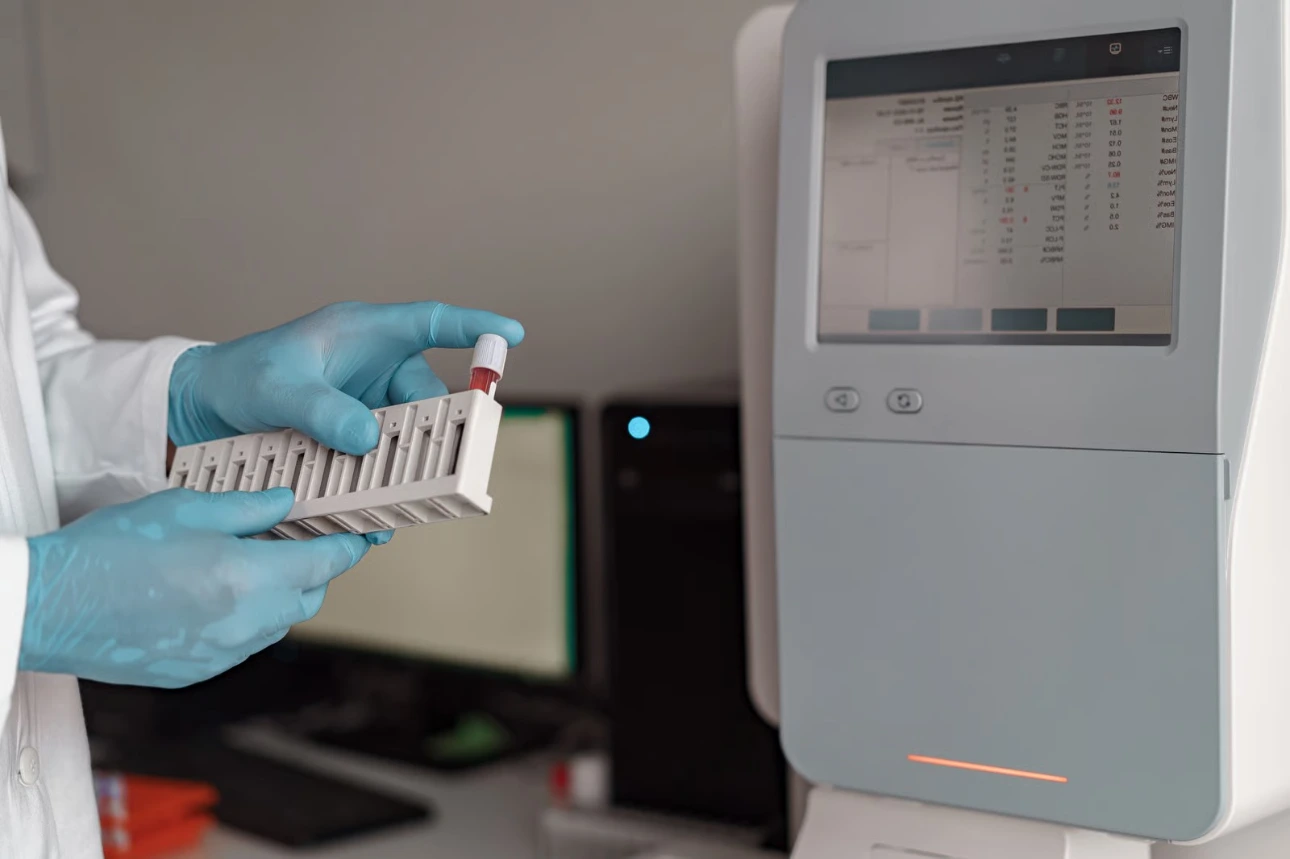
Reliable scientific progress depends on the quality of experimental evidence. Analytical characterization provides essential information about the composition, structure, purity, stability, and functional properties of molecular and nanoscale systems.
Depending on the research objective, characterization strategies may include spectroscopic measurements, chromatographic separation, electron or optical microscopy, particle-size analysis, surface characterization, and biochemical assays.
The selection of appropriate methods depends on the properties being investigated and the limitations of each technique. Complementary methods are often necessary because no single analytical approach can fully describe every aspect of a complex molecular assembly.
Research quality also depends on appropriate controls, reproducible procedures, transparent reporting, and careful interpretation of uncertainty. These principles allow scientific observations to be evaluated, compared, and independently investigated.
A structured approach to experimental validation strengthens the reliability of findings and supports the responsible development of emerging biotechnological approaches. Learn more
Computational Modeling and Molecular Data Integration
Computational methods are becoming increasingly important in molecular science. Molecular simulations, structural modeling, bioinformatics, and statistical analysis can help researchers investigate relationships that may be difficult to characterize using experimental methods alone.
Computational models can be used to explore molecular conformations, estimate interaction patterns, investigate material properties, and generate hypotheses for further testing. Their usefulness depends on the quality of the underlying data, the assumptions incorporated into the model, and the suitability of the chosen methodology.
Data integration also allows researchers to compare observations obtained through different analytical platforms. When experimental measurements and computational predictions are interpreted together, they can provide complementary information about molecular systems.
Nevertheless, computational predictions require appropriate validation. Models are representations of complex systems rather than complete substitutes for experimental evidence. Their role is to support scientific reasoning, guide research priorities, and help identify questions that merit further investigation.


Emerging Perspectives in Nanobiotechnology
Nanobiotechnology continues to develop through advances in molecular design, biomaterial engineering, nanoscale characterization, and the study of biological interfaces. These developments are expanding the range of scientific questions that researchers can investigate.
One area of interest concerns the design of materials that respond to specific environmental conditions. Researchers investigate how changes in temperature, chemical composition, molecular recognition, or other parameters may influence material behavior.
Another important direction involves the characterization of complex biological assemblies. Understanding how proteins, lipids, nucleic acids, and engineered materials organize themselves can provide insights into the principles governing molecular interactions.
Research into extracellular vesicles, biomimetic materials, and other biologically derived structures also contributes to discussions about molecular transport and intercellular communication. Such investigations require careful characterization to distinguish different particle populations and establish the mechanisms responsible for observed effects.
As analytical and computational methods continue to improve, researchers will be better positioned to examine these systems with greater precision. Progress will depend on reproducible experimentation, interdisciplinary cooperation, and rigorous evaluation of scientific claims.Learn more
Scientific Collaboration and Knowledge Exchange
Scientific innovation benefits from environments that encourage communication between researchers working across different disciplines. Molecular nanotechnology and translational research involve complementary expertise in chemistry, biology, engineering, computational science, and biomedical development.
Knowledge exchange helps researchers identify shared methodological challenges, compare experimental strategies, and develop new questions at the intersection of established disciplines.
Collaboration can also improve the interpretation of complex findings. A material scientist may provide insight into nanoscale structure, while a molecular biologist can investigate interactions with biological components. Computational researchers may then help integrate the resulting datasets into a broader analytical framework.
Clear scientific communication is essential to these partnerships. Well-documented methods, transparent reporting, and precise terminology allow research findings to be assessed and reused by different scientific communities.


A Framework for Responsible Scientific Innovation
The development of molecular technologies requires more than technical progress. It also requires careful consideration of reproducibility, biological compatibility, data quality, and the limitations of available evidence.
Responsible research begins with clearly defined objectives and appropriate experimental controls. It continues through systematic characterization, independent verification where possible, and transparent communication of both positive and inconclusive findings.
When research moves toward biomedical applications, additional considerations may include manufacturing consistency, regulatory requirements, ethical review, and the need for appropriate preclinical or clinical evaluation.
These considerations are particularly important when scientific findings are discussed in the context of potential therapeutic applications. Early-stage discoveries can generate valuable research directions, but they should not be presented as established clinical solutions without adequate evidence.
By maintaining rigorous scientific standards, researchers can support a more reliable and responsible path from molecular investigation to potential practical applications.
Connecting Molecular Discovery With Translational Progress
Molecular nanotechnology and translational research provide complementary perspectives on the relationship between fundamental science and technological development. Molecular engineering helps explain how structures are designed and organized, while translational research examines the relevance of scientific discoveries to practical challenges.
Together, these fields create opportunities to investigate complex biological systems, improve the characterization of advanced materials, and develop new approaches to molecular analysis and biomedical research.
Future progress will depend on the integration of experimental science, computational methods, analytical technologies, and interdisciplinary collaboration. Equally important will be the commitment to reproducibility, critical evaluation, and responsible communication.
Molecular Nanotechnology and Translational Research Assemblies represents a scientific framework centered on these connections. By exploring molecular structures, nanoscale interactions, biological interfaces, and translational research principles, this field contributes to a broader understanding of how molecular discoveries can inform future developments in biotechnology and biomedical science.